
Stroke Recovery Care
At Angels Private Home Care, we provide compassionate stroke recovery care at home, helping individuals adjust to life after a stroke while remaining in the comfort and familiarity of their own surroundings. Our personalised support is shaped around each person's abilities, daily routines and changing care needs.
- Personal Care & Hygiene Support
- Mobility & Safe Movement Support
- Medication Routine Support
- Nutrition & Hydration Support
- Companionship & Emotional Support
- Assistance with Daily Activities & Appointments
Personalised Stroke Recovery Support at Home
Recovering can bring significant changes to everyday life. Once familiar tasks may become more difficult, and individuals may need additional support after a stroke with personal care, mobility, communication and daily routines.
At Angels Private Home Care, we understand that every person’s experience following a stroke is different. Some individuals may need occasional assistance, while others require more regular support as they adjust to changes in their abilities.
Our stroke home care is tailored around the individual, taking into account their existing routines, personal preferences, abilities and the guidance of relevant healthcare professionals.
We can help with everyday activities such as washing, dressing, preparing meals, moving safely around the home and maintaining social connections. Where appropriate, we can also support individuals in following agreed routines and guidance provided by their rehabilitation team.
We aim to help individuals maintain as much independence as possible, while providing families with reassurance that their loved one has compassionate and reliable support at home.
How Our Stroke Home Care Can Help
Stroke recovery can involve different challenges depending on the effects of the stroke and the individual’s circumstances. Our carers provide practical assistance with everyday activities, helping individuals feel more comfortable and supported as they adjust to life at home.
The support included in each care package is agreed following an assessment of individual needs.
Personal Care and Hygiene Support
A stroke can affect movement, coordination and the ability to complete everyday personal care tasks independently.
Our carers can help with washing, bathing, dressing, grooming, personal hygiene and continence routines, always respecting the individual’s privacy, dignity and preferences.
We understand that some tasks may take longer following a stroke. Our approach allows time for individuals to participate in their own care wherever possible, providing assistance only where it is needed.
By adapting support to each person’s abilities, we aim to make daily routines more manageable while helping them maintain confidence and independence.
Mobility and Safe Movement Support
Some individuals experience changes in strength, balance, coordination or mobility following a stroke. Moving around the home, getting in and out of bed or transferring between chairs may therefore require additional assistance.
Angels can provide practical mobility support based on an assessment of your needs and the relevant professional guidance.
This may include assistance with moving around the home, support with transfers and helping maintain a safe and accessible living environment.
We also consider everyday surroundings, such as clear walkways, suitable access to frequently used rooms and potential trip hazards.
Where a physiotherapist or other healthcare professional has provided guidance, carers can support agreed everyday routines within their role and competence. Our home care services do not replace specialist physiotherapy or rehabilitation treatment.
Support with Medication Routines
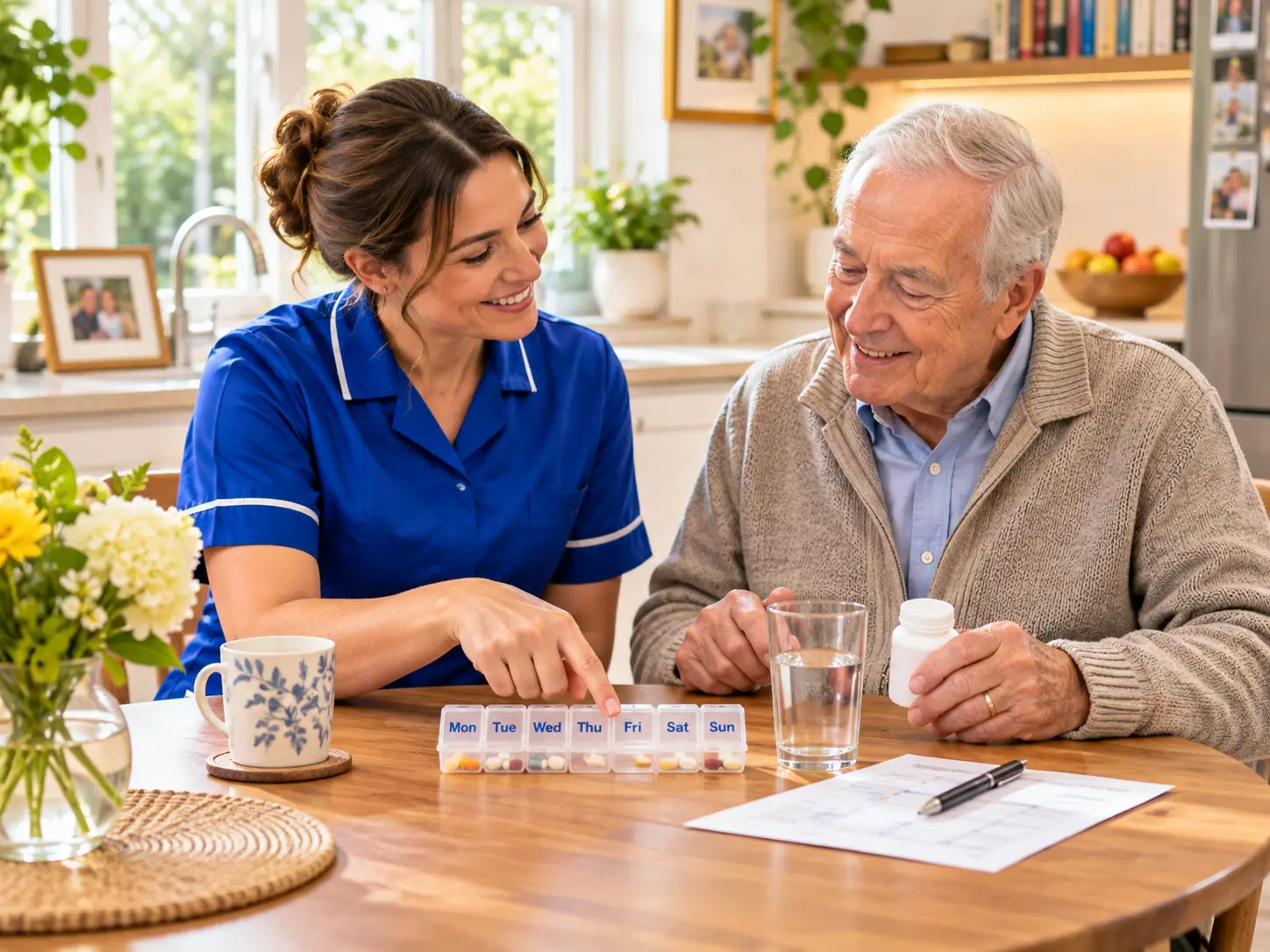
Following a stroke, some individuals may have prescribed medication as part of their ongoing healthcare.
Keeping track of medication routines can become more difficult, particularly when several prescriptions or specific timings are involved.
Our carers can provide agreed medication support, including reminders and assistance in accordance with the individual’s care plan and prescribed instructions.
During assessment, we discuss the medication routine, the level of assistance required and how this can be incorporated into daily care arrangements.
Carers follow agreed instructions and do not independently change prescribed doses or schedules. Any concerns about medication or changes in an individual’s condition should be raised with the appropriate healthcare professional.
Nutrition and Hydration Support
Eating and drinking can become more challenging for some individuals following a stroke. Changes in swallowing, coordination or the ability to prepare meals may affect everyday mealtimes.
Our carers can help with meal preparation, making drinks available and providing agreed assistance with eating and drinking.
We take account of individual preferences, dietary requirements and usual mealtime routines, helping make daily nutrition and hydration easier to manage.
If someone has swallowing difficulties or requires a modified diet, care arrangements must follow the guidance of their speech and language therapist or other relevant healthcare professional. Any concerns about swallowing, eating or drinking should be referred appropriately.
Companionship and Daily Living Support
Maintaining familiar routines and meaningful activities can be an important part of adjusting to life after a stroke.
Our carers provide companionship and practical assistance with everyday activities, helping individuals remain connected to the things they enjoy.
Support may include conversation, reading, listening to music, helping with hobbies or assisting with agreed household tasks.
We take time to understand each person’s interests and preferences, encouraging participation wherever appropriate without placing unnecessary pressure on them.
The aim is to support a sense of normality, confidence and connection while providing assistance that reflects individual abilities.
Support with Appointments and Outings
Attending appointments and maintaining social connections can become more difficult following a stroke, particularly where mobility or communication has been affected.
Angels can discuss assistance with appointments, errands and suitable social activities as part of your care arrangements.
We consider the support required before, during and after an outing, including mobility assistance, transport arrangements and any relevant communication needs.
Where individuals are receiving ongoing rehabilitation or follow-up care, maintaining access to appointments can be an important part of their wider support arrangements.
Whether you need help attending a healthcare appointment or returning to familiar activities, speak to our team about the assistance available.
Support That Responds to Changing Needs
Recovery following a stroke can look different for everyone. Some individuals may gradually regain certain abilities, while others may experience ongoing difficulties that require longer-term assistance.
At Angels, we understand that care arrangements need to reflect these changes. The level of support required when someone first returns home may be different from what they need several weeks or months later.
A review may involve adjusting visit lengths, providing additional assistance with personal care or mobility, or discussing more regular support throughout the day.
We also recognise that recovery can involve input from several healthcare professionals. Where appropriate, we can work alongside GPs, physiotherapists, occupational therapists and other professionals involved in the individual’s care.
Where more extensive assistance is required, we can discuss whether live-in care may be suitable. Our team will help you understand the available options and whether the required support can be safely provided at home.
A Doctor-Led Approach to Stroke Recovery Care
Recovering after a stroke can involve complex and changing care needs. Having an understanding of the individual’s wider health circumstances is important when arranging appropriate support at home.
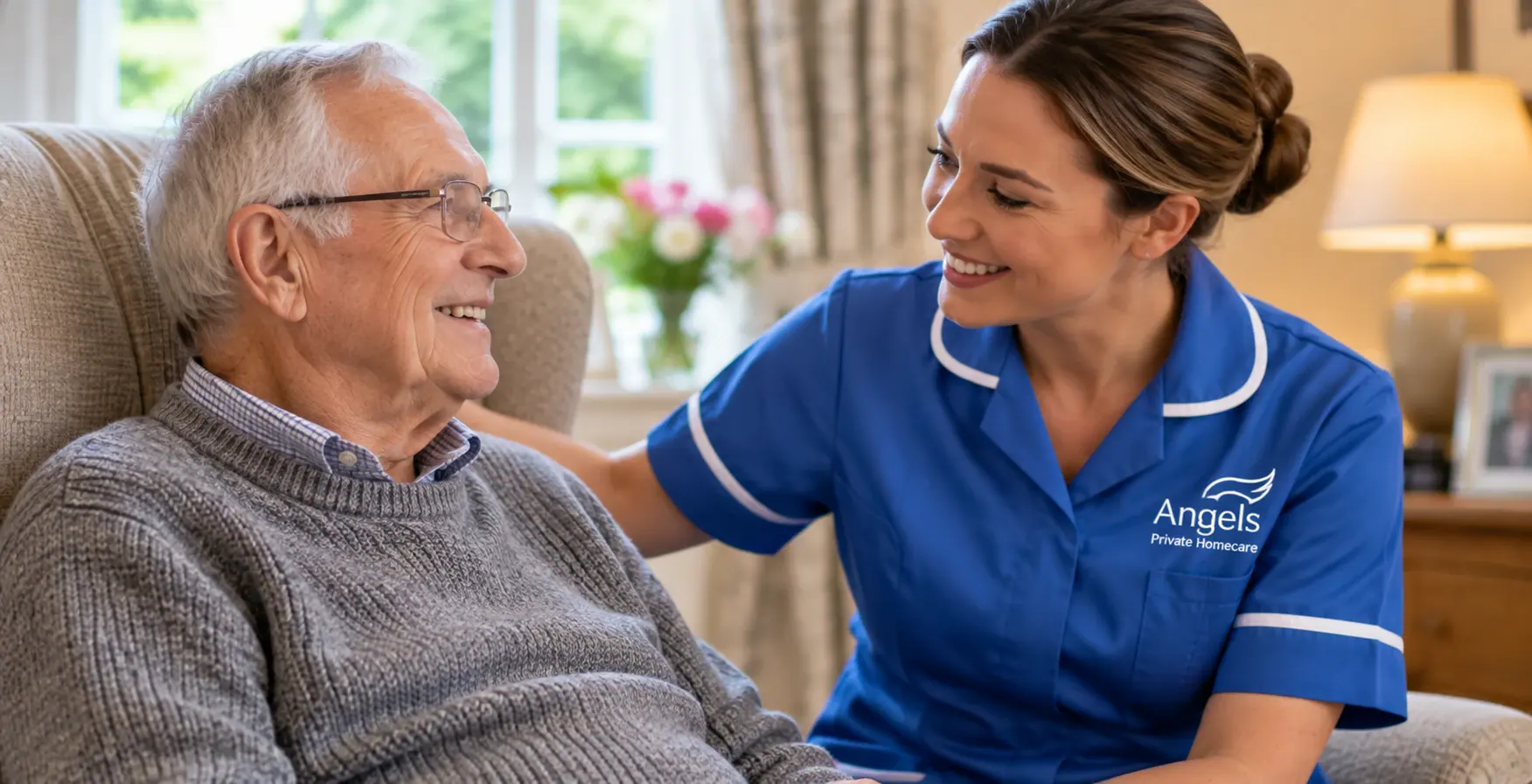
At Angels Private Home Care, our doctor-led approach is guided by our director, Dr Sushil Jayaharan, a Consultant Geriatrician.
This clinical understanding informs our approach to specialist care at home, helping us consider the individual’s overall well-being alongside their practical daily care requirements.
Following a stroke, changes in mobility, communication, appetite, confidence and general well-being may affect the type of assistance required.
Where appropriate, we can take account of guidance from GPs, hospital discharge teams, physiotherapists, occupational therapists and speech and language therapists when developing and reviewing care arrangements.
Our carers provide practical support within their training and responsibilities, while specialist diagnosis, treatment and rehabilitation remain with the appropriate healthcare professionals.
Our aim is to combine compassionate everyday care with clinical understanding, giving individuals and their families additional reassurance throughout the recovery process.
Support for Families and Those Providing Care
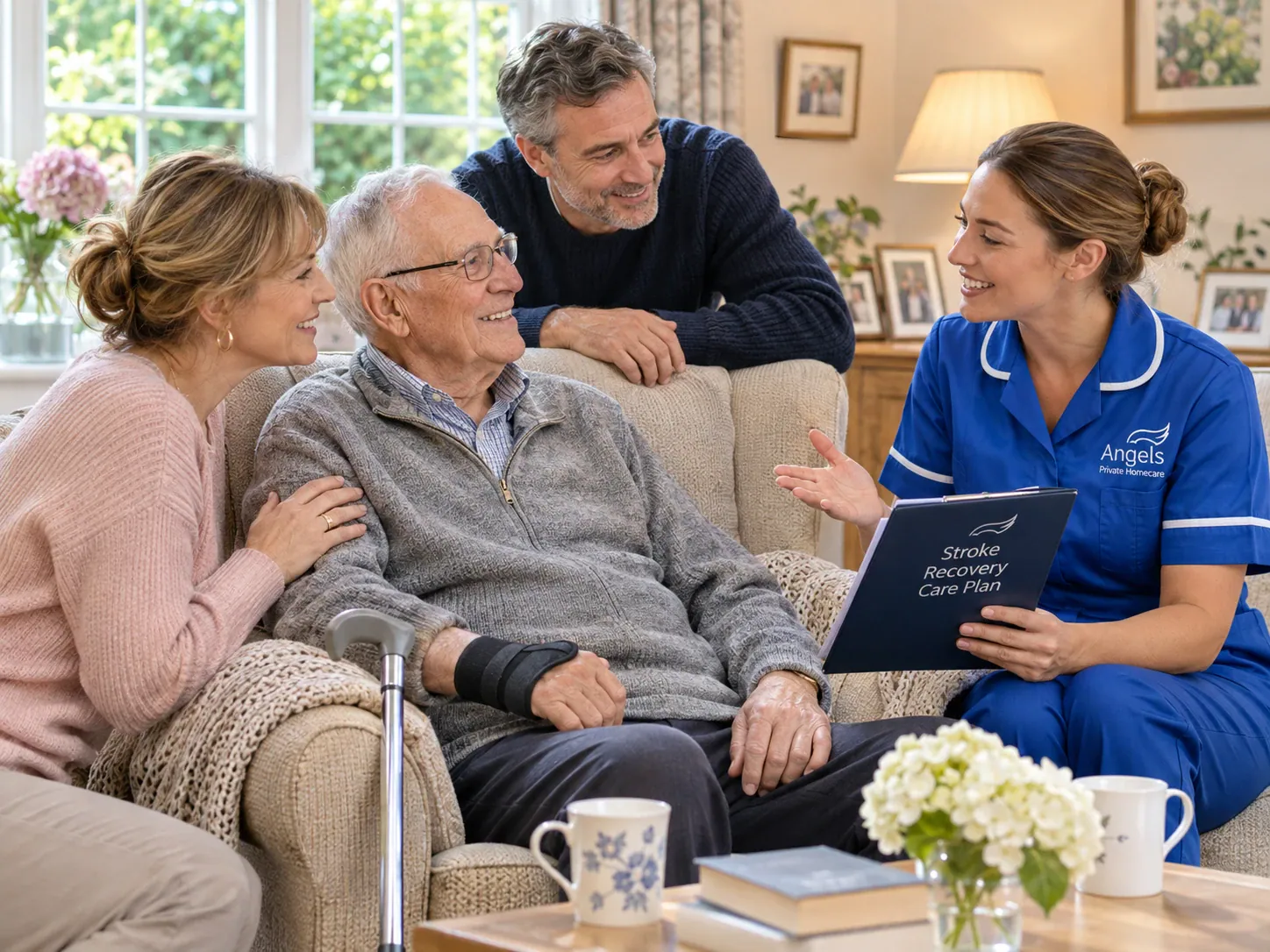
A stroke can affect the whole family, particularly when a loved one needs additional assistance with everyday activities following a hospital stay.
Family members may find themselves taking on new responsibilities, from helping with personal care and meals to attending appointments and supporting mobility.
Angels can provide practical assistance that complements the support already in place, helping reduce pressure on family members while ensuring their loved one receives appropriate care.
With the individual’s agreement, families can share information about established routines, preferences and the areas where additional help would make a difference.
We also discuss communication arrangements so that family members understand how care is being delivered and who to contact if they have questions or concerns.
If you need additional support while a family carer rests, attends appointments or spends time away, contact our team to discuss suitable arrangements and availability.
Arranging Your Stroke Recovery Care at Home
Planning stroke recovery care begins with understanding the individual’s circumstances, daily routines and the support they require.
At Angels, we take a personalised approach to arranging care, ensuring that individuals and their families understand the available options before support begins.
Talk to Our Team
Tell us about your loved one's circumstances, where they live and the support they currently need.
You may be arranging care following a hospital discharge, planning ahead or looking for additional assistance with everyday activities.
Our team will listen to your concerns, discuss your priorities and explain the next steps.
Arrange a Home Assessment
A home assessment helps us understand the individual's personal care needs, mobility, medication routines, communication requirements and existing support arrangements.
We also consider the home environment and any relevant guidance from healthcare professionals involved in their recovery.
This allows us to identify the practical assistance required and discuss how care can be delivered safely and comfortably at home.
Agree a Personalised Care Plan
Following the assessment, we develop a personalised care plan outlining the agreed tasks, visit arrangements, individual preferences and responsibilities.
Where relevant, we take account of discharge information and guidance from healthcare professionals, including any recommendations relating to mobility, nutrition or communication.
We also discuss the proposed costs and care arrangements before services begin, ensuring that you understand what is included.
Introduce Care and Review Support
We explain how care will begin and discuss introductions to the carers involved.
We aim to provide a familiar team wherever possible, helping individuals feel comfortable with the people supporting them.
As care gets underway, we continue learning about the individual's preferences and how the arrangements are working. The care plan can be reviewed when needs, routines or circumstances change.
Stroke Recovery Care in Lytham St Annes and Nearby Areas
Angels Private Home Care provides personalised stroke recovery care in Lytham St Annes and surrounding communities, helping individuals receive practical support in the comfort of their own homes.
Our wider service area includes Freckleton, Warton, Kirkham, Wesham, Blackpool, Preston and nearby areas.
Whether you are arranging support following a hospital discharge or looking for ongoing assistance with daily living, our local team can discuss your circumstances and the care arrangements available.
Availability depends on your location, assessed needs and the level of support required.
Contact our team to check whether we provide stroke home care in your area and discuss how we can help.
Confidence From Real Feedback
Speak to Angels About Stroke Recovery Care
Whether you are considering care for yourself or arranging support for someone close to you, Angels Private Home Care is here to listen.
We understand that life after a stroke can bring unexpected challenges, and finding the right support can make a meaningful difference to everyday life.
Talk to us about your current circumstances, daily routines and the assistance you would like. Our team can explain the available options and help you take the next step towards personalised care at home.
Stroke Recovery Care FAQs
Can someone receive home care after a stroke?
What support can carers provide following a stroke?
Can stroke recovery care be arranged after hospital discharge?
Can carers help with mobility after a stroke?
Can carers support someone who has difficulty communicating after a stroke?
Can you help someone who has difficulty eating or swallowing after a stroke?
Can stroke recovery care be provided on a live-in basis?
Where an individual requires more regular assistance, live-in care may be an option. This provides ongoing support within the home, with arrangements tailored to assessed needs and availability. Contact Angels to discuss whether live-in care would be suitable.